
Robotic Inspection of Pigtails is a specialized non-destructive inspection service designed to evaluate the integrity of pigtails connecting reformer tubes to manifolds. Pigtails are critical components exposed to high temperatures, cyclic stresses, and complex loading conditions, making them highly susceptible to creep, fatigue, and cracking.
Robotic inspection enables accurate evaluation of internal and external condition of pigtails that are otherwise difficult to inspect using conventional methods.
Why Robotic Pigtail Inspection Is Required
Pigtail failures can result in sudden leaks and severe safety incidents. Robotic inspection helps address challenges such as:
Limited accessibility and complex geometry
High operating temperature and cyclic loading
Detection of early-stage cracking and thinning
Inadequate coverage using manual inspection methods
Need for reliable data for integrity assessment
Robotic inspection improves inspection reliability and safety.
Scope of Inspection
Robotic inspection of pigtails covers:
Inlet and outlet pigtails
High-temperature alloy pigtails
Welded connections and bends
Internal bore and critical stress locations
The scope is defined based on pigtail configuration and service severity.
Inspection Methodology
Robotic pigtail inspection follows a structured approach.
Assessment of pigtail design, operating conditions, and inspection objectives.
Selection of suitable robotic platform and inspection sensors.
Deployment of robotic crawler for internal or external inspection.
Collection of inspection data including thickness, geometry, and surface condition.
Analysis of inspection findings to identify damage mechanisms.
Reporting with clear integrity assessment and recommendations.
Tools, Techniques and Standards
Robotic pigtail inspection is supported by:
Miniaturized robotic crawlers
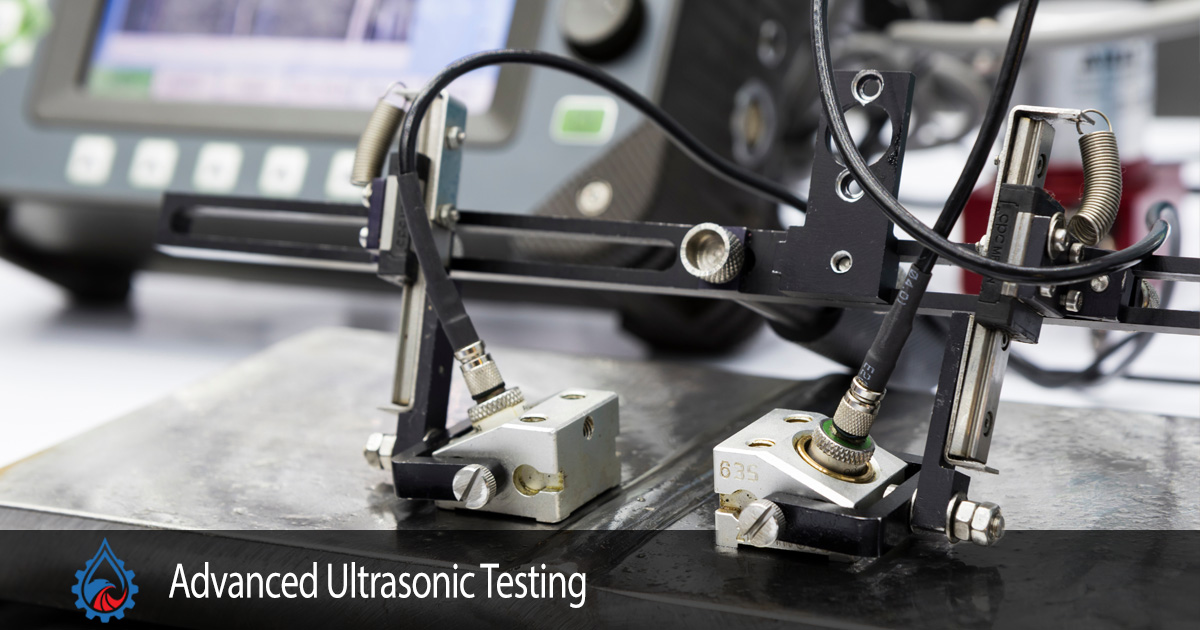
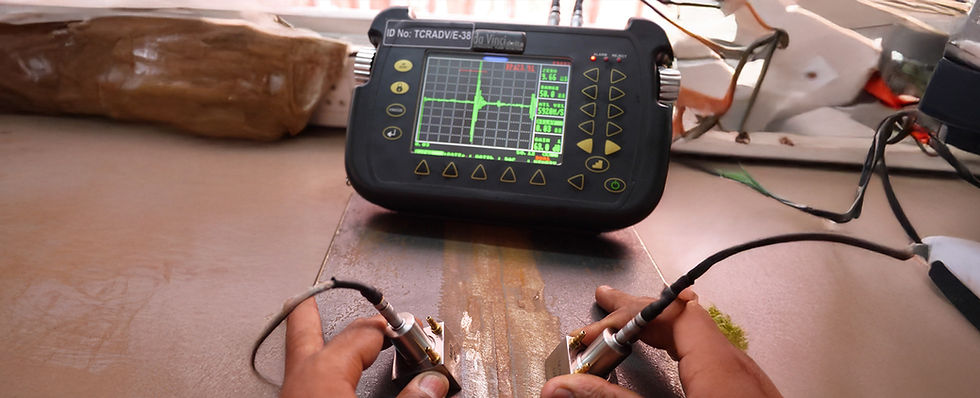
Advanced ultrasonic and visual inspection sensors
Remote data acquisition and control systems
Inspections align with applicable NDT standards and integrity assessment practices.
Key Benefits
Safe inspection of high-risk pigtails
Improved detection of early-stage damage
Reduced inspection time and manpower requirement
Reliable data for life assessment and planning
Enhanced safety and operational confidence
Industries and Applications
Robotic pigtail inspection is widely applied in hydrogen plants, ammonia units, refineries, petrochemical plants, and high-temperature process industries.
Applications include inspection of reformer pigtails and critical high-temperature connections.
Robotic Inspection of Pigtails provides a safe and effective solution for evaluating the integrity of critical high-temperature connections. By combining robotics with advanced NDT techniques, this service supports reliable operation and proactive asset management.

-2.jpg)



-2.jpg)