Failure Investigation / Root Cause Analysis
12 September 2025
Failure Analysis is a structured engineering investigation carried out to determine the root cause of failure in industrial components, equipment, or systems. The objective is to identify not only how a failure occurred, but why it happened and what actions are required to prevent recurrence.
This service covers both metallic and non-metallic components, recognizing that modern industrial facilities operate with a combination of metals, polymers, composites, FRP/GRP systems, and engineered materials. Failure analysis plays a critical role in improving safety, reliability, asset life, and operational continuity across industries.
The outcome of a failure analysis is a technically defensible conclusion supported by evidence, engineering judgment, and clear corrective and preventive recommendations.
Failures Addressed Through This Service
Failures can occur due to a combination of design limitations, material issues, fabrication defects, operational conditions, and environmental exposure. Failure analysis helps address challenges such as:
Repeated failure of the same component or equipment
Sudden breakdowns causing unplanned shutdowns
Unclear or conflicting opinions on failure causes
Premature failures well before design life
Corrosion, erosion, fatigue, creep, or cracking
Degradation of non-metallic materials due to chemicals, temperature, or UV exposure
Disputes related to insurance claims or vendor responsibility
Inadequate material selection or quality control
Without a structured investigation, corrective actions remain assumption-based and failures tend to repeat.
Failure Analysis of Metallic Components
Metallic component failure analysis focuses on identifying damage mechanisms in ferrous and non-ferrous materials such as carbon steels, alloy steels, stainless steels, nickel-based alloys, aluminium alloys, cast irons, and weldments.
Components commonly analysed include pressure vessels, boilers, heat exchangers, piping systems, pipelines, shafts, fasteners, valves, structural members, and rotating equipment.
Typical failure mechanisms investigated include fatigue, creep, corrosion, stress corrosion cracking, hydrogen-related damage, brittle fracture, overload, erosion, wear, and weld-related metallurgical issues. Metallurgical degradation due to prolonged exposure to high temperature, pressure, or aggressive environments is also evaluated.
The analysis combines metallurgical examination, fracture analysis, mechanical testing, chemical verification, and engineering assessment to identify root causes and contributing factors.
Failure Analysis of Non-Metallic Components
Non-metallic failure analysis addresses failures in polymers, elastomers, composites, ceramics, FRP and GRP systems, rubber components, linings, coatings, seals, gaskets, and insulation materials.
Non-metallic materials often fail due to chemical attack, thermal ageing, UV exposure, improper curing, manufacturing defects, mechanical overloading, or incompatibility with the service environment.
Typical applications include FRP tanks and pipelines, liners, expansion joints, seals, gaskets, composite structures, and protective coatings. The analysis focuses on understanding material behaviour under service conditions and identifying degradation mechanisms such as embrittlement, delamination, cracking, softening, or loss of mechanical strength.
Failure analysis of non-metallic components is critical for preventing environmental incidents, leakage, and unexpected loss of containment.
Failure Analysis Methodology
Failure analysis is conducted using a systematic, evidence-based approach.
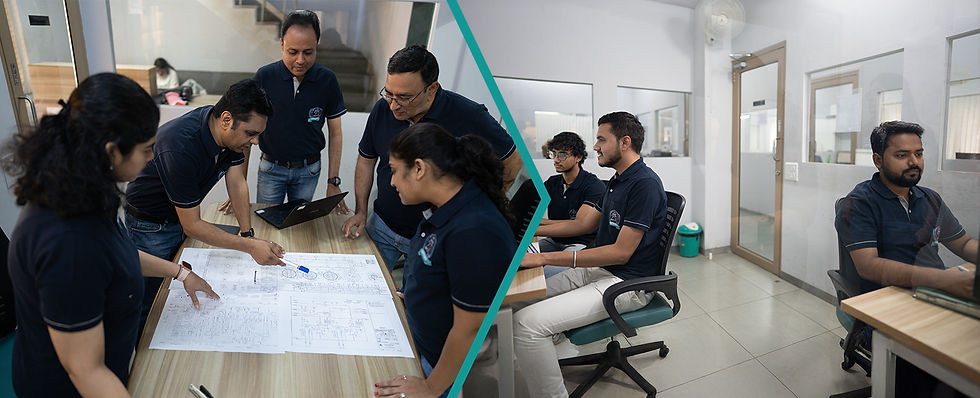
Data Review and Background Study Design documents, material specifications, operating parameters, inspection records, and maintenance history are reviewed to understand service conditions and failure context.
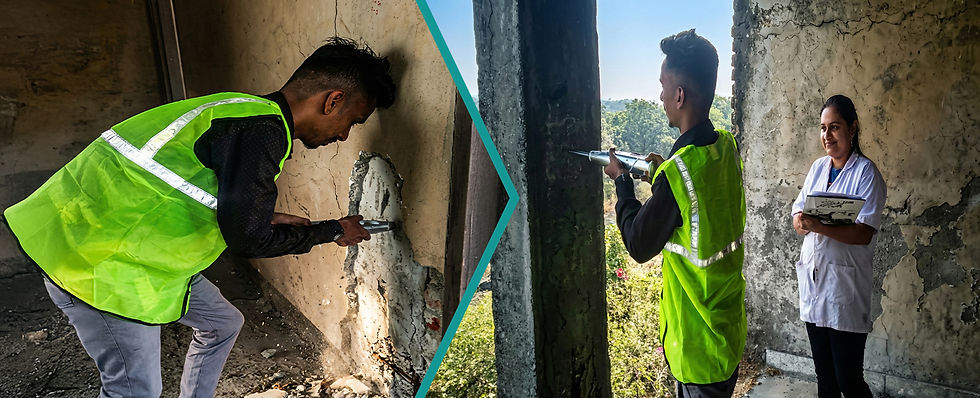
On-Site Examination Visual inspection, dimensional checks, and non-destructive testing are carried out to identify damage patterns, deformation, cracks, corrosion, or material loss.
Sample Collection and Preservation Representative samples are extracted using controlled procedures to preserve fracture features and material integrity for laboratory examination.
Laboratory Investigation Metallurgical, mechanical, chemical, microscopic, and material testing is performed depending on the nature of the component and failure.
Engineering Assessment Stress levels, loading conditions, temperature exposure, chemical environment, and design margins are evaluated to correlate observed damage with operating conditions.
Root Cause Identification The primary failure mechanism and contributing factors are identified and validated through evidence.
Corrective and Preventive Recommendations Clear recommendations are provided covering material selection, design modification, operating controls, inspection strategies, and repair methodology.
Tools, Techniques and Standards
Failure analysis is supported by advanced diagnostic tools and internationally accepted standards.
Optical and electron microscopy
Scanning Electron Microscopy and EDS
Fractography and surface analysis
Mechanical and hardness testing
Chemical and elemental analysis
Advanced non-destructive testing methods
All investigations align with applicable ASTM, ASME, API, ISO, and industry-specific guidelines.
Key Benefits
Accurate identification of true root cause
Prevention of repeated failures
Improved operational safety and reliability
Reduced downtime and maintenance cost
Technical support for insurance and legal cases
Inputs for fitness for service and remaining life assessments
Improved material selection and design practices
Industries and Applications
Failure analysis services are widely applied across:
Oil and gas, refineries, and petrochemical plants
Power generation and utilities
Fertilizer and chemical industries
Manufacturing and fabrication
Infrastructure and heavy engineering
Marine and offshore installations
Insurance and forensic investigations
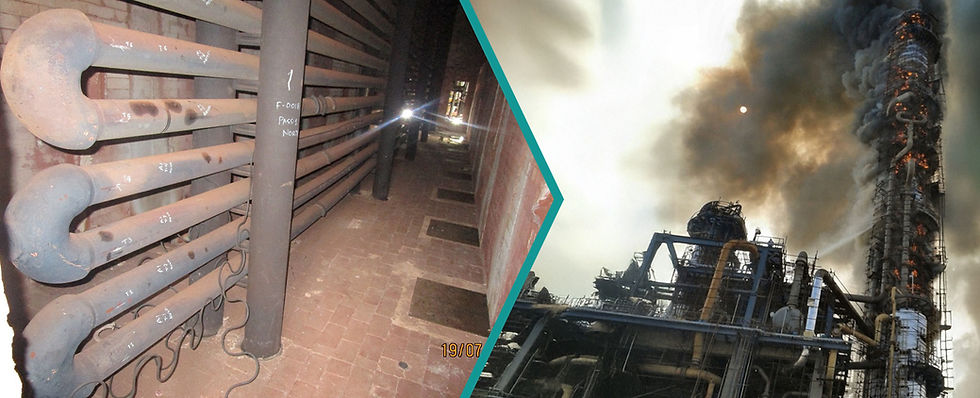
Applications include boiler tube failures, piping leaks, shaft fractures, weld failures, corrosion damage, FRP tank degradation, composite failures, and polymer component breakdowns.
Failure Analysis of Metallic and Non-Metallic Components provides a clear technical understanding of why failures occur and how they can be prevented. By combining field inspection, laboratory testing, and engineering analysis, this service supports safe operation, informed decision-making, and long-term asset integrity.
TCR Advanced provides reliable, unbiased, and accurate root cause analysis (RCA) that is accepted across various industries, including oil & gas, refinery, petrochemical, fertilizers, power, engineering, defence, aviation and insurance. With over 10000 investigations completed, TCR offers exceptional expertise in metallurgical failure analysis. Their assessments of both static and rotary equipment are trusted globally for critical evaluations. As recognized industry leaders, TCR's findings contribute to safer and more informed operational decisions.


.png)
.png)

-2.jpg)



%20as%20per%20API-1104-2.jpg)