Remaining Life Assessment of Boilers (IBR and international guidelines)
Remaining Life Assessment of Boilers (IBR and international guidelines)
12 September 2025
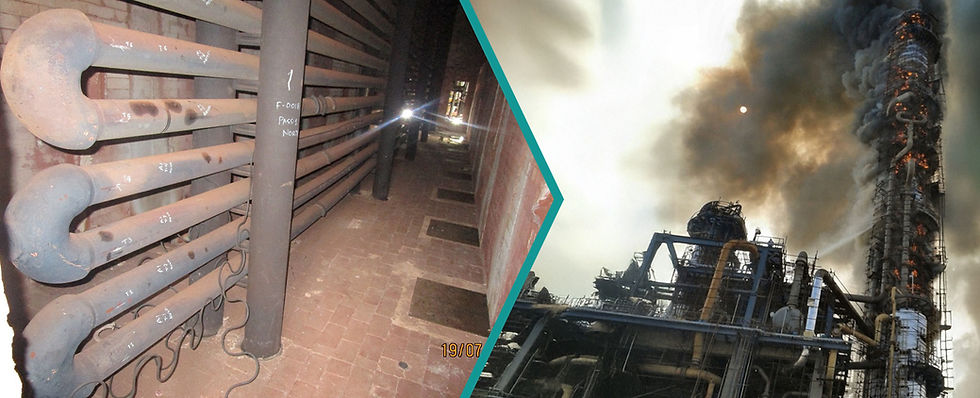
Remaining Life Assessment of Boilers is a comprehensive evaluation carried out to determine the structural and metallurgical condition of boiler pressure parts and estimate their remaining safe operating life. Boilers operate under high temperature and pressure, making them highly susceptible to creep, fatigue, corrosion, erosion, and overheating damage.
This service is critical for both subcritical and supercritical boilers, especially those approaching or exceeding their design life. Boiler RLA supports decisions related to continued operation, load enhancement, refurbishment, replacement, and life extension while maintaining safety and compliance.
Importance of Boiler Remaining Life Assessment
Boiler failures can lead to forced outages, safety incidents, and significant financial losses. Remaining Life Assessment helps address issues such as:
Ageing boilers operating beyond design life
Frequent boiler tube failures and unplanned shutdowns
Unknown extent of creep or overheating damage
Increased operating severity and cyclic loading
Regulatory compliance with boiler safety authorities
Planning of capital expenditure and life extension
Boiler RLA shifts maintenance strategy from reactive to predictive.
Scope of Boiler Assessment
The assessment typically covers critical pressure parts including:
Water wall tubes
Superheaters and reheaters
Economisers
Headers and piping
High-temperature welds and bends
Both metallurgical condition and mechanical integrity are evaluated.
Assessment Methodology
Boiler Remaining Life Assessment follows a structured approach.
Review of design data, material specifications, operating history, temperature and pressure data, and past failure records.
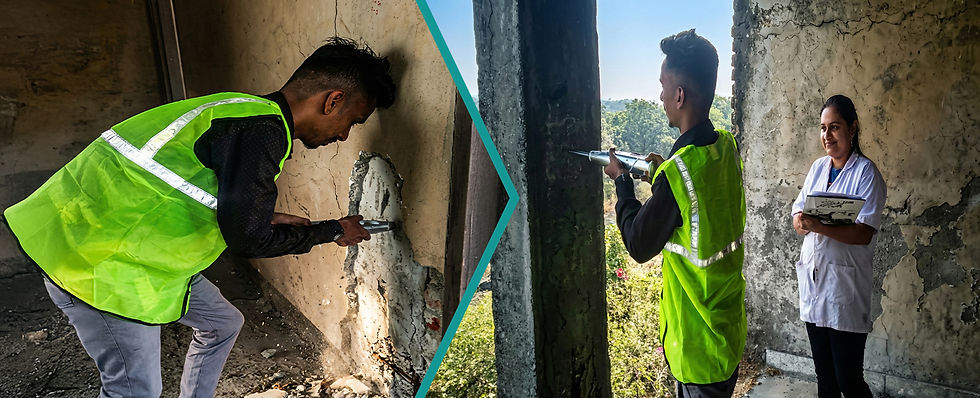
On-site inspection using advanced non-destructive testing to detect wall thinning, oxide scale formation, cracking, and overheating damage.
In-situ metallography and hardness testing to evaluate creep damage, microstructural degradation, and material ageing.
Oxide scale thickness measurement to estimate metal temperature exposure and assess remaining creep life.
Damage mechanism evaluation focusing on creep, fatigue, corrosion, erosion, hydrogen-related damage, and thermal stresses.
Life estimation and recommendations including remaining safe operating life, inspection intervals, repair or replacement strategies, and life extension options.
Tools, Techniques and Standards
Boiler RLA is supported by specialized inspection and analytical techniques such as:
Advanced ultrasonic testing and thickness mapping
Oxide scale measurement
In-situ metallography and hardness testing
Creep and fatigue life assessment models
Assessments comply with IBR, ASME, ASTM, and applicable international boiler standards.
Key Benefits
Early detection of creep and overheating damage
Reduction in forced outages and tube failures
Improved boiler safety and reliability
Optimized inspection and maintenance schedules
Support for load enhancement and life extension
Compliance with statutory boiler regulations
Industries and Applications
Boiler Remaining Life Assessment is widely applied in thermal power plants, captive power units, process industries with waste heat boilers, refineries, petrochemical plants, and fertilizer complexes.
Applications include subcritical and supercritical boilers operating under high temperature and pressure conditions.
Remaining Life Assessment of Boilers provides a clear understanding of boiler health and remaining service capability. By combining advanced inspection, metallurgical evaluation, and engineering analysis, this service enables safe operation, effective maintenance planning, and long-term asset reliability.
-2.jpg)


.png)
.png)



%20as%20per%20API-1104-2.jpg)