
Matrix Array Ultrasonic Testing is an advanced ultrasonic inspection technique that uses a two-dimensional array of transducer elements to electronically steer and focus ultrasonic beams in multiple directions. MAUT enables three-dimensional visualization of defects, providing superior detection and characterization compared to conventional phased array techniques.
This method is especially effective for inspection of complex weld geometries, thick sections, and critical components requiring high inspection accuracy.
Why MAUT Is Required
Complex components and welds often present challenges for traditional ultrasonic methods. MAUT helps address challenges such as:
Detection of defects with complex orientation
Accurate characterization of flaw shape and extent
Inspection of thick or geometrically complex components
Requirement for high-resolution inspection data
MAUT provides enhanced coverage and inspection confidence.
Scope of Inspection
MAUT is applicable to:
Critical weld joints
Pressure vessels and thick components
Pipelines and piping welds
Structural and load-bearing components
High-integrity industrial assets
Inspection Methodology
MAUT inspection follows a controlled process.
Development of inspection procedure and focal laws.
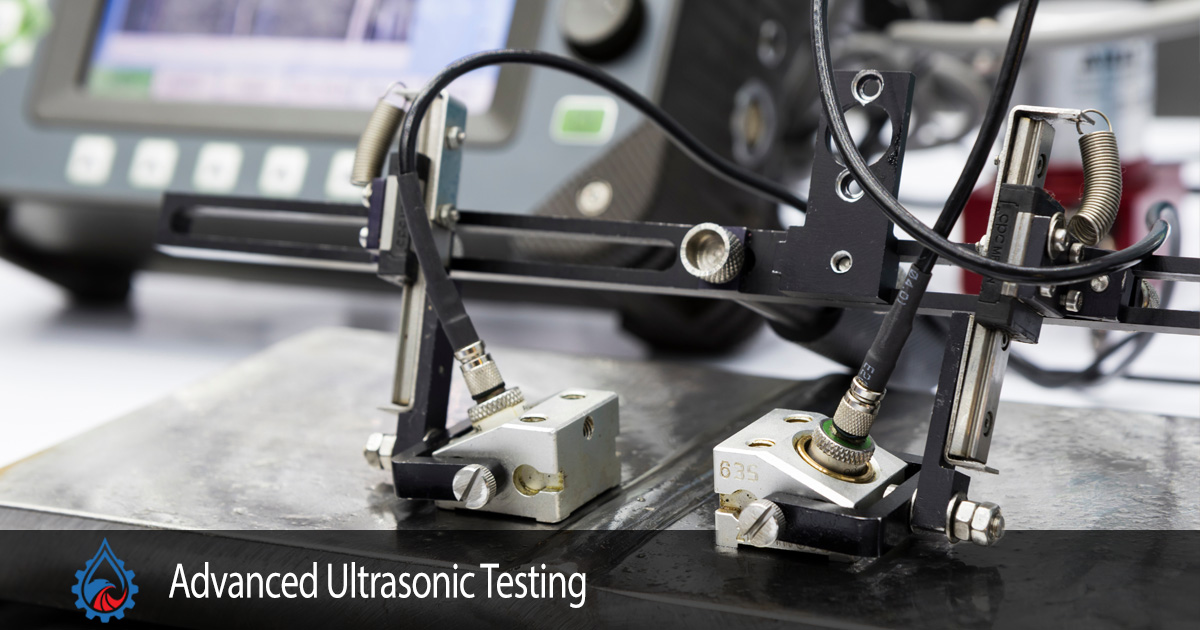
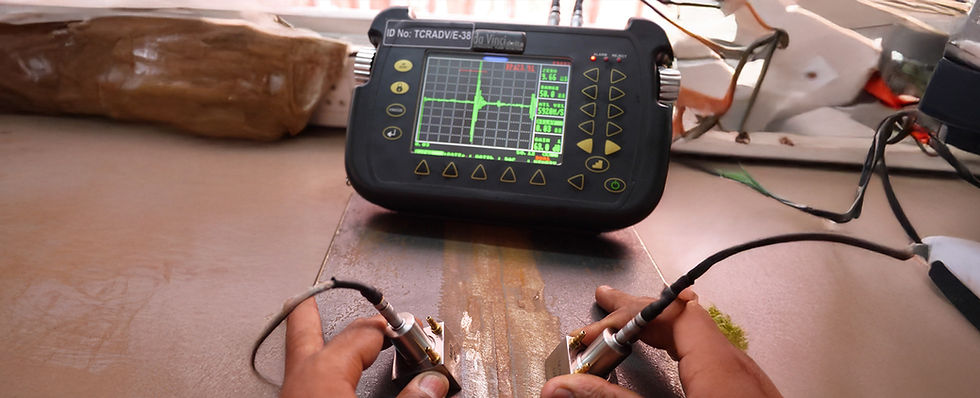
Deployment of matrix array probes with encoded scanning.
Electronic beam steering and focusing in multiple planes.
Acquisition of volumetric inspection data.
3D visualization and analysis of detected indications.
Interpretation and reporting of results.
Tools and Techniques
MAUT inspection is supported by:
Matrix array ultrasonic probes
Advanced ultrasonic instruments
3D imaging and analysis software
Key Benefits
Enhanced defect detection capability
Three-dimensional defect visualization
Improved accuracy in flaw sizing
Reduced inspection uncertainty
Strong input for integrity assessment
Industries and Applications
MAUT is widely used in oil and gas, refineries, petrochemical plants, power plants, heavy engineering, and critical fabrication projects.
Matrix Array Ultrasonic Testing provides advanced volumetric inspection with high accuracy and confidence. Its ability to visualize defects in three dimensions makes it a powerful tool for evaluating critical components.

-2.jpg)


-2.jpg)