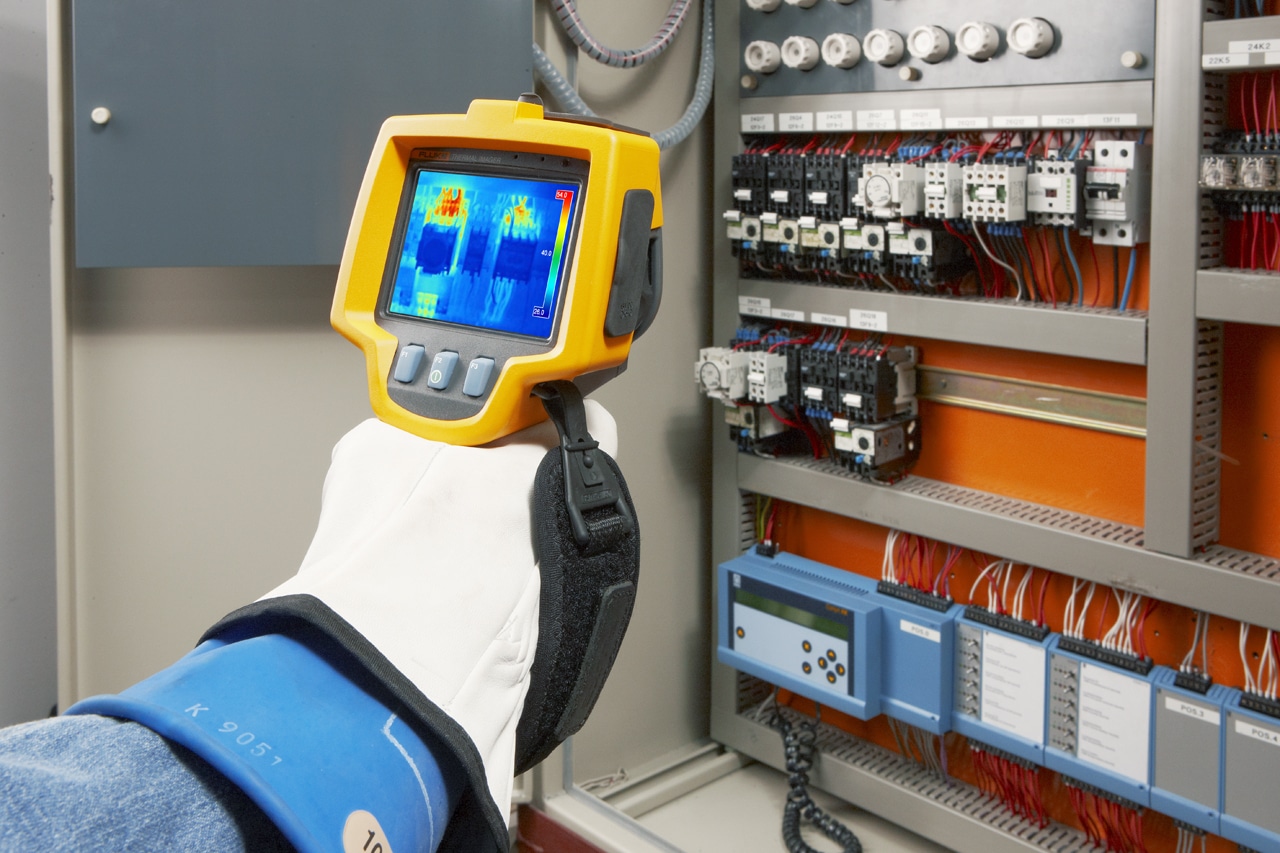
Thermography Inspection is a non-contact inspection technique that uses infrared imaging to detect temperature variations on equipment surfaces. These thermal patterns help identify hidden issues such as insulation failure, refractory damage, overheating, electrical faults, and abnormal process conditions.
Thermography is particularly effective for operating equipment where shutdown is not feasible.
Why Thermography Inspection Is Required
Many critical defects are not visible to the naked eye. Thermography inspection helps address challenges such as:
Undetected overheating or heat loss
Insulation and refractory damage
Electrical system faults
Early-stage equipment degradation
Scope of Inspection
Thermography inspection covers:
Boilers and furnaces
Refractory-lined equipment
Electrical panels and connections
Rotating machinery
Process piping and vessels
Inspection Methodology
Thermography inspection follows a structured process.
Selection of inspection areas and operating conditions.
Capture of infrared thermal images.
Identification of abnormal temperature patterns.
Correlation of thermal data with operating parameters.
Reporting with findings and recommendations.
Tools and Techniques
Thermography inspection is supported by:
Infrared thermal imaging cameras
Temperature analysis software
Key Benefits
Early detection of hidden defects
Non-contact inspection during operation
Reduced risk of unexpected failures
Improved energy efficiency and safety
Industries and Applications
Thermography inspection is widely applied in power plants, refineries, petrochemical facilities, chemical plants, manufacturing units, and infrastructure projects.
Thermography Inspection provides valuable insight into equipment condition through thermal behaviour analysis. By identifying hidden issues early, this service supports reliable and efficient asset operation.

-2.jpg)



-2.jpg)